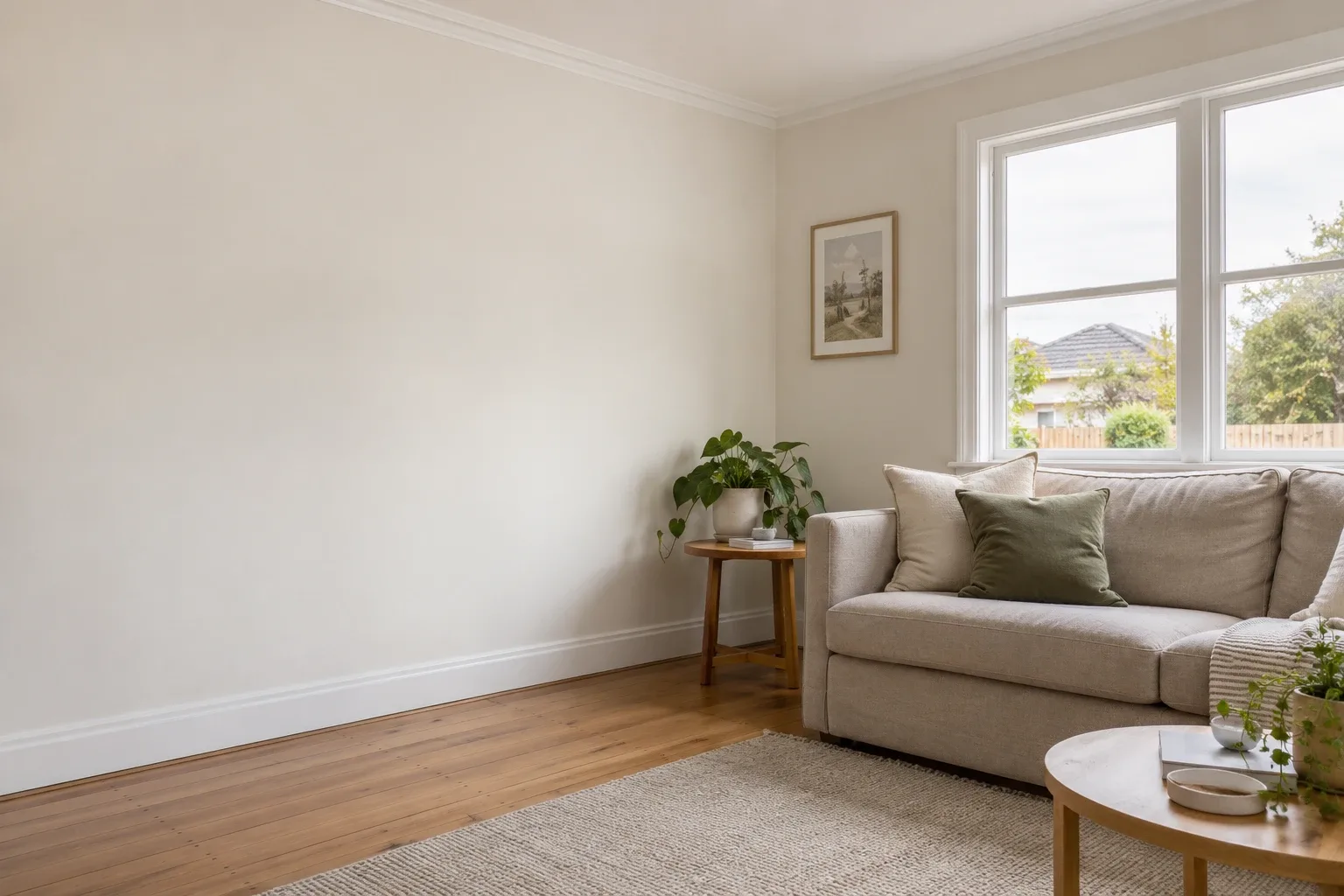
The short answer
Level 4 is the normal finish for walls and ceilings in most NZ homes. Level 5 adds a skim over the whole surface, and is worth it where light hits walls or ceilings at a low angle, or where you're using a glossier paint. Most homes use a mix: Level 4 in most rooms and Level 5 in a few critical areas.
Where the levels come from
Plasterboard finishing in New Zealand is described using levels of finish from AS/NZS 2589, a joint Australian and New Zealand standard. The levels run from 0 (board fixed, no stopping) up to 5 (the smoothest). In homes, you'll mostly hear about Levels 4 and 5.
Level 4
At Level 4, joints are taped and stopped with several coats, fixings and corners are covered and everything is sanded smooth. It suits flat and low-sheen paints and normal lighting. It's what most walls and ceilings in houses are finished to.
Level 5
Level 5 starts with a Level 4 finish, then adds a thin skim over the entire surface. That evens out the difference in texture between the paper face of the board and the stopped joints, which can show through paint under strong side light.
It takes more time and material, so it costs more. But in the right places, it's the difference between walls that look flat and walls where you can see every joint.
When Level 5 is worth it
Think about Level 5 for:
- Long hallwaysLight from a window or door at one end runs along the wall.
- Big windowsStrong low sun across walls and ceilings shows up every ripple.
- Downlights close to wallsWall-washing light picks up any joint or bump.
- Glossier paintsThe more sheen a paint has, the more it shows.
- Large, open ceilingsRaked and open-plan ceilings catch light from many angles.
Lighting decides more than you think
A wall can look perfect under the work lights and show joint lines once the downlights go in. That's why it pays to plan your lighting before the stopping starts, and tell your plasterer where the lights and big windows will be.
Our approach
When we quote a stopping job, we'll recommend a level for each area and explain why. Because we paint as well, we stop every wall knowing how it'll look when it's painted and lit.
Quick questions
Is Level 5 always better?
It's smoother, but it isn't needed everywhere. In rooms with normal lighting and low-sheen paint, a well-done Level 4 finish looks great.
Can you upgrade to Level 5 after painting?
Yes, a painted wall can be skim coated, but it costs more than doing it before painting. It's best to decide before the stopping starts.